
Rancho Santa Margarita's Directory Shelf
No official catalog page documents a named publisher and year sequence of standalone Rancho Santa Margarita city directories. The collection trail is still workable when searches use the city's real growth pattern. First homes sold in 1986, the local library branch opened in 1994, and incorporation followed in 2000. Regional telephone books, reverse directories, newspapers, library databases, deeds, permits, and association history fill the gap between land records and a modern household.
| Collection | Years or era | Where held | Access and use |
|---|---|---|---|
| Regional telephone and city titles | Mostly post-1986 community era; exact RSM run unverified | OCPL catalog and branch | Ask for South Orange County, Mission Viejo, Trabuco Canyon, and Saddleback Valley coverage |
| Ancestry Library Edition | National digitized titles; RSM-specific run not verified | Any OCPL branch | Full privileges inside a branch; search name, spouse, occupation, address |
| HeritageQuest | Census, family and local-history material | OCPL | Library authentication; availability follows current access rules |
| Orange County Register and NewsBank | 1987 to current | OCPL licensed resources | Search names, community news, legal notices, and obituaries |
| OCPL digitized newspapers | Some 1920s through 1980s issues | Library resources | Predecessor communities and county context |
| California Death Index | 1940 to 1997 | OCPL genealogy channels | Lead to a certificate or obituary, not the certificate itself |
| Federal census | Public through 1950 in 2026 | NARA, FamilySearch, library databases | Use historical enumeration geography before the city existed |
The collection table is a research plan, not a claim that every title is digitized or present at every branch. Confirm the exact call number, year, and access condition with OCPL staff.
A Young Rancho Santa Margarita Directory Run
The absence of a century-long Rancho Santa Margarita directory sequence is itself local evidence. The area changed from ranch and open land to planned neighborhoods in the late twentieth century. Traditional annual volumes may have indexed the region under a larger postal or telephone market. A search that demands the exact municipal name can miss a record that is present under Trabuco Canyon or Mission Viejo.
| Local date | Why it changes a historical search |
|---|---|
| 1986 | First master-planned homes sold; modern household sources begin to grow |
| 1989 | Community Civic Association begins in the local history |
| 1992 | Oso, Antonio, and Alicia Parkway links and extensions improve access |
| 1994 | OCPL Rancho Santa Margarita branch opens |
| 2000 | Rancho Santa Margarita incorporates; city files become a distinct municipal layer |
This timeline explains why deeds, permits, newspapers, and HOA records often tell the local story better than a presumed annual volume. The city history account is the source for the chronology.
Search Rancho Santa Margarita Regional Directory Titles
Use the current address and every older place label that could have been used when the volume was printed. Search Rancho Santa Margarita, Trabuco Canyon, Mission Viejo, Saddleback Valley, and named developments such as Dove Canyon, Robinson Ranch, Rancho Cielo, Trabuco Highlands, and Walden. A directory publisher may group these communities by telephone exchange, postal route, or county region instead of municipal boundary.
Names can move across editions. Test a surname, initials, spouse notation, business name, and address. When the address is new, search the tract or community name. When the person is older, search a newspaper obituary or census location before assuming that a current ZIP existed at the time.
Modern address-keyed work belongs in the Rancho Santa Margarita street directory workflow. Historical collection identification stays with the city directory shelf.
Note: Rancho Santa Margarita directory searches improve when regional labels travel with the current address and surname variants.
OCPL's Rancho Santa Margarita Genealogy Shelf
The Rancho Santa Margarita branch at 30902 La Promesa opened November 29, 1994. It offers public computers, Wi-Fi, a quiet room, and staff technology appointments. Its value for a directory search is systemwide. Ancestry Library Edition, Fold3, HeritageQuest, digitized Orange County newspapers, NewsBank's Orange County Register, and historical newspaper microfilm connect current names to older county and regional material.
Ancestry Library Edition has full privileges inside a branch with the appropriate library card. Fold3 adds military records. HeritageQuest supports census and local-history research. NewsBank begins in 1987, almost exactly when the planned community's occupied era begins. OCPL's obituary guide points to the California Death Index, FamilySearch, Social Security Death Index, Register microfilm, and newspaper searches for older deaths.
The branch page supplies the local contact and hours. OCPL's history and genealogy resources show which licensed collections are available and where branch-only access applies.
The OCPL Rancho Santa Margarita branch page is the source shown in the local library capture.
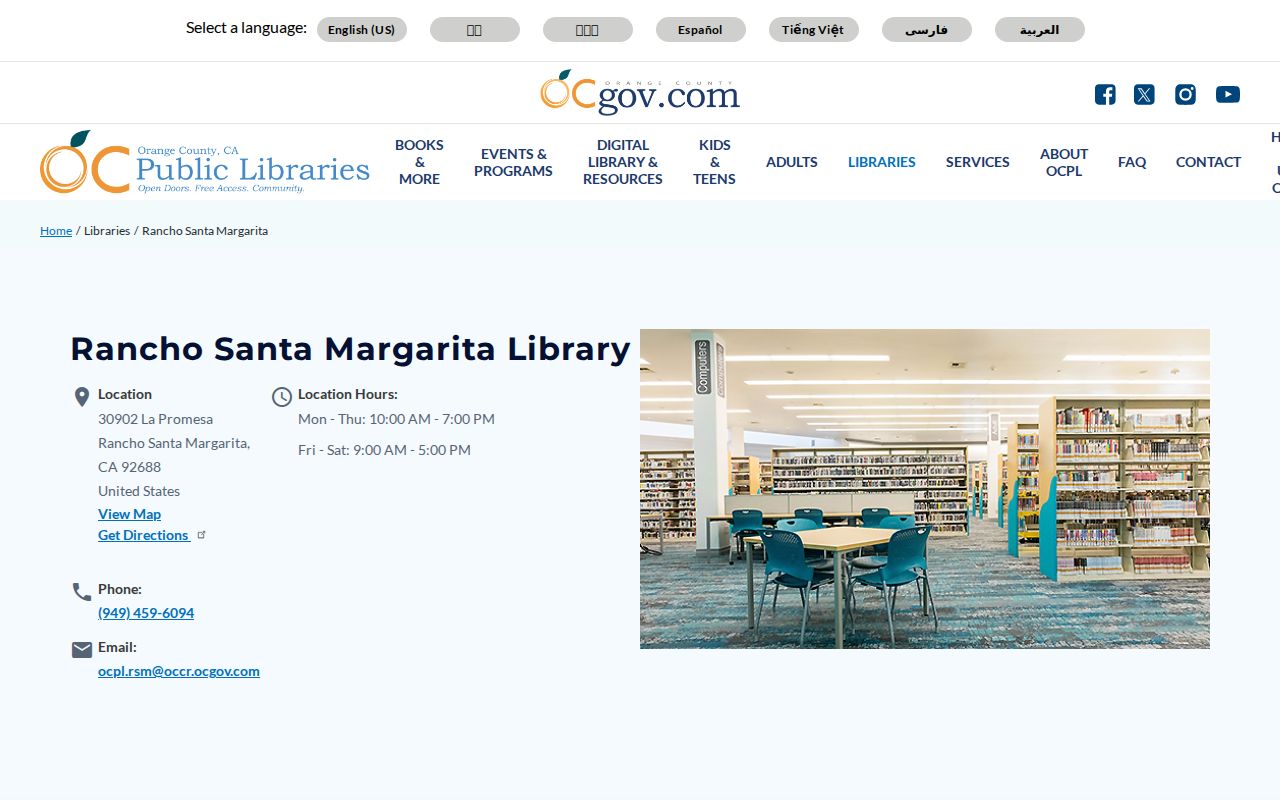
The branch resource view is the practical starting point when an exact Rancho Santa Margarita title is not listed online.
Rancho Santa Margarita Reverse Directories by Address
A conventional city directory starts with a surname. A criss-cross or reverse directory starts with a street address or telephone number, then supplies a listed subscriber or occupant. That distinction makes reverse volumes useful for house history. An entry can include a surname and initials, spouse in parentheses, a “wid” notation, occupation, residence address, business address, telephone number, and an owner or renter marker if the volume uses one.
- Householder index
- An index organized around the person or household treated as the main entry.
- Criss-cross directory
- A reverse volume that starts with address or telephone information.
- Abbreviation key
- The publisher's legend for occupations, family marks, phone notation, and symbols.
- Regional title
- A volume that groups several communities rather than using one city boundary.
Photograph or cite the title page, publication year, and abbreviation page with any entry. A short symbol can change the meaning of an address line. The safest use pairs the directory with a deed, permit, newspaper, or assessment clue.
The Ancestry Library Edition collection is the source shown in the digitized-directory capture.
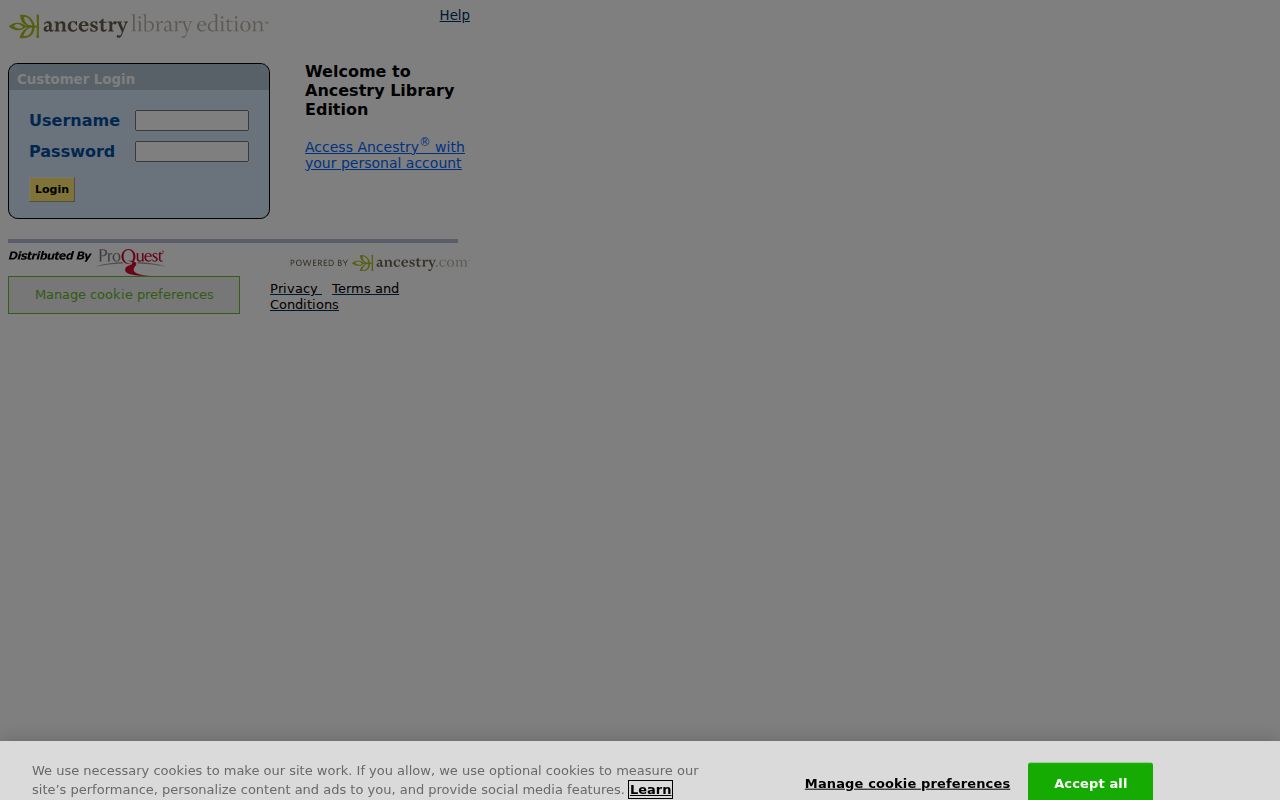
The library database landing page shows why a licensed collection may require branch access rather than a public web result.
Read Rancho Santa Margarita Directory Entries
No openly available official sample entry for a Rancho Santa Margarita-specific volume was inspected. When a regional entry is retrieved, capture the complete context before treating it as a resident clue. The heading, publication year, city or community label, and abbreviation key can be as important as the name line.
| Entry part | Question it answers |
|---|---|
| Surname and given name | Who is listed, and is the name abbreviated? |
| Spouse or family mark | Does the publisher identify a spouse, widow, or household link? |
| Occupation | What public role or work label appears in the volume? |
| Residence address | Which address did the publisher associate with the person? |
| Telephone or business address | Is the line residential, professional, or both? |
| Symbol and abbreviation key | What does the publisher's shorthand actually mean? |
A directory is not a certified record. It may reflect a prior year, omit an unlisted number, or preserve a former address after a move. Match the entry to a deed, permit, newspaper item, obituary, or another directory year before drawing a household conclusion.
Note: A Rancho Santa Margarita city directory entry becomes useful only after its publisher, year, address, and symbols are identified.
Rancho Santa Margarita's 1987 Directory Era
NewsBank's Orange County Register coverage begins in 1987, one year after the first master-planned homes sold. That timing gives Rancho Santa Margarita an unusually coherent local newspaper trail. Search names, neighborhood openings, school and community events, legal notices, sales references, and obituaries. A newspaper can show a person participating in a place even when no directory entry is available.
Newspaper evidence has its own limits. A published name may be a writer, event guest, business contact, decedent, or legal-notice party. Confirm the role and date. For older material, OCPL microfilm and digitized county issues reach back into the predecessor-community era, though exact issue coverage differs by resource.
NewsBank, an obituary, and a city directory can complement one another. The newspaper supplies narrative context. The directory supplies a listed address. A deed or permit anchors the property or physical change.
Pair Rancho Santa Margarita Directories With Deeds
A household trail is strongest when a directory year sits between two dated official records. Start with the entry. Note its address, spouse, business, and publication year. Search the assessment or recorder trail for the parcel and owner. Search city or county permit files for a physical change. Then look for a newspaper, obituary, or probate record that explains a move or family connection.
- Capture the directory title, publisher, year, page, and abbreviation key.
- Convert the address to a parcel, tract, lot, or historical place label.
- Compare the person and address with the county deed or assessment trail.
- Use a permit, newspaper, obituary, or probate file to test the time line.
- Record conflicts instead of smoothing them into one assumed household.
For post-1986 research, city permits and Register coverage can be especially helpful. For pre-1986 land, tract maps, aerials, county planning, and older community names matter more than a modern volume.
Rancho Santa Margarita Directories and Sanborn Maps
Sanborn fire-insurance maps are valuable for older built places, but no Rancho Santa Margarita city sheets were located in the reviewed research. The community's urban development is late, and the modern subdivisions followed open or ranch land. The Library of Congress explains that street names and numbering can change, so even a nearby historic sheet must be matched to its key map and geography.
For a Rancho Santa Margarita historical search, recorded tract maps, aerial photography, county-era permits, deeds, and planning material are more likely to date a house. A Sanborn map can be a useful comparison only when the historic settlement and coverage fit the address. Do not treat an absent sheet as proof that a property had no earlier history.
The Library of Congress Sanborn collection explains the coverage and map-reading limits.
Note: Rancho Santa Margarita's late urban growth makes tract maps, deeds, permits, and newspapers stronger than an assumed city volume.
Rancho Santa Margarita Census and Directory Geography
Federal census records are public through 1950 under the 72-year rule as of 2026, but the city did not exist then. Search by historical enumeration geography, township, ranch, or predecessor settlement. A 1950 address cannot be expected to use a current Rancho Santa Margarita street, ZIP, or neighborhood label. Trabuco Canyon and other older geographic terms may be the correct path.
Census schedules can show people grouped in a household, but they are snapshots with their own address and enumeration rules. Pair a census household with a regional directory, newspaper, deed, or probate record. The goal is a defensible time line, not a modern address forced into an old source.
Rancho Santa Margarita Obituaries Close Directory Trails
OCPL's obituary workflow recommends the Orange County Register through NewsBank or Obits Archive for deaths after January 1, 1987. Older deaths may require Register microfilm, the California Death Index from 1940 to 1997, FamilySearch, or the Social Security Death Index. An obituary can connect a former resident to a spouse, children, service, prior place, and cemetery.
Probate supplies the official estate proceeding. Petitions and notices may identify a decedent, petitioner, heirs, and mailing addresses, while underlying documents can require courthouse access or a copy request. Later recorded transfers can test whether the family trail reaches the same parcel and legal description. For lawful family history, obituary and probate form a useful closing pair.
When a directory entry cannot be found, do not fill the gap with a generic assumption. Use the local development chronology, regional labels, newspaper coverage, and county land trail to explain what the collection can and cannot show.